Saturday, April 2, 2016

Only The Shadow Knows....

"Only the Shadow knows"--guess you need to be my age to remember this radio show..
or dear, I'm really dating myself, aren't I?
It was one of the best mystery radio shows of the time
Maybe, this is where my love of mysteries began.


Here is another 'Shadow' mystery that will feature fingerless gloves, designed
by Valerie Pollock--
It requires about 110 - 140 meters each of two different colours or yarns. Variegated is not recommended for this pattern, but a solid colour or tonal yarn would work well. Choose high contrast colours (dark and light) for strong definition of the pattern and the shadow effect. The pattern is knitted flat.
The medium will fit approximately 7.5” to 8” palm circumference. The large will fit approximately 8.5” to 9” palm circumference.
As a Mystery Knit-Along, clues will be released once per week, on April 1, 8, 15 and 22. This is a free Ravelry pattern.


Friday, April 1, 2016

April 1--April Fools!

I always hated those April Fool jokes or pranks!  I wondered how did this all get started--here's how!


The uncertain origins of a foolish day

by David Johnson and Shmuel Ross


April Fools' Day, sometimes called All Fools' Day, is one of the most light-hearted days of the year. Its origins are uncertain. Some see it as a celebration related to the turn of the seasons, while others believe it stems from the adoption of a new calendar.

New Year's Day Moves

Ancient cultures, including those of the Romans and Hindus, celebrated New Year's Day on or around April 1. It closely follows the vernal equinox (March 20th or March 21st.) In medieval times, much of Europe celebrated March 25, the Feast of Annunciation, as the beginning of the new year.
In 1582, Pope Gregory XIII ordered a new calendar (the Gregorian Calendar) to replace the old Julian Calendar. The new calendar called for New Year's Day to be celebrated Jan. 1. That year, France adopted the reformed calendar and shifted New Year's day to Jan. 1. According to a popular explanation, many people either refused to accept the new date, or did not learn about it, and continued to celebrate New Year's Day on April 1. Other people began to make fun of these traditionalists, sending them on "fool's errands" or trying to trick them into believing something false. Eventually, the practice spread throughout Europe.

Problems With This Explanation

There are at least two difficulties with this explanation. The first is that it doesn't fully account for the spread of April Fools' Day to other European countries. The Gregorian calendar was not adopted by England until 1752, for example, but April Fools' Day was already well established there by that point. The second is that we have no direct historical evidence for this explanation, only conjecture, and that conjecture appears to have been made more recently.

Constantine and Kugel

Another explanation of the origins of April Fools' Day was provided by Joseph Boskin, a professor of history at Boston University. He explained that the practice began during the reign of Constantine, when a group of court jesters and fools told the Roman emperor that they could do a better job of running the empire. Constantine, amused, allowed a jester named Kugel to be king for one day. Kugel passed an edict calling for absurdity on that day, and the custom became an annual event.
"In a way," explained Prof. Boskin, "it was a very serious day. In those times fools were really wise men. It was the role of jesters to put things in perspective with humor."
This explanation was brought to the public's attention in an Associated Press article printed by many newspapers in 1983. There was only one catch: Boskin made the whole thing up. It took a couple of weeks for the AP to realize that they'd been victims of an April Fools' joke themselves.

Spring Fever

It is worth noting that many different cultures have had days of foolishness around the start of April, give or take a couple of weeks. The Romans had a festival named Hilaria on March 25, rejoicing in the resurrection of Attis. The Hindu calendar has Holi, and the Jewish calendar has Purim. Perhaps there's something about the time of year, with its turn from winter to spring, that lends itself to lighthearted celebrations.

Observances Around the World

April Fools' Day is observed throughout the Western world. Practices include sending someone on a "fool's errand," looking for things that don't exist; playing pranks; and trying to get people to believe ridiculous things.
The French call April 1 Poisson d'Avril, or "April Fish." French children sometimes tape a picture of a fish on the back of their schoolmates, crying "Poisson d'Avril" when the prank is discovered.
  • For more April Fools' fun, read all about ingenious hoaxes: in sports, science, art, the media, Hollywood, and the Internet.

Thursday, March 31, 2016

QAL--Let's Dance!


Just Quiltin' has a QAL (Quilt Along) for you!  
It's called Barn Dance but it's Hole in the Barn Door quilt blocks in all different sizes,
colors and positions on the top.
It's also a stash buster!
Dig into that box of fabrics, cut and sew!  

Wednesday, March 30, 2016

Wednesday--Yarn Along


I'm working away on FLG (Fingerless Gloves).  Somehow, I've misplaced one of my favorite pairs.
This pattern is "Leaves" by Valentina Georgieva 
I have one almost finished


For some reason, I hate doing the thumb, so save it till the very last minute

I've begun the second mitt--still haven't done the thumb on the first mitt!
The fiber is wool that I overdyed-it was an ugly color that I would never use,
so into the dye pot it went--good solution in my book!


Tuesday, March 29, 2016

Marly's Shawl KAL--


A SHAWL! Something that is rather simple, uncomplicated and gauge isn’t something that is super important. The project for this KAL is a rather easy shawl but it packs a lot of punch. There are many learning opportunities learn while you make this garter stitch shawl.  The official start date is March. 30, 2016 – April. 27, 2016. There will be one video released each week along with the pattern instructions for that section.  Here is a link to the introduction video #1. 
You will be able to find all the videos at: Marly Bird

Monday, March 28, 2016

Crochet To Your Hearts Content

Isn't this the most gorgeous crochet wrap?

Learn to finger crochet this fanciful necklace--looks like fun neckwear!

And this wearable shawl--oh my!
I love finding these interesting websites--
here's to the hook and needles!

Sunday, March 27, 2016

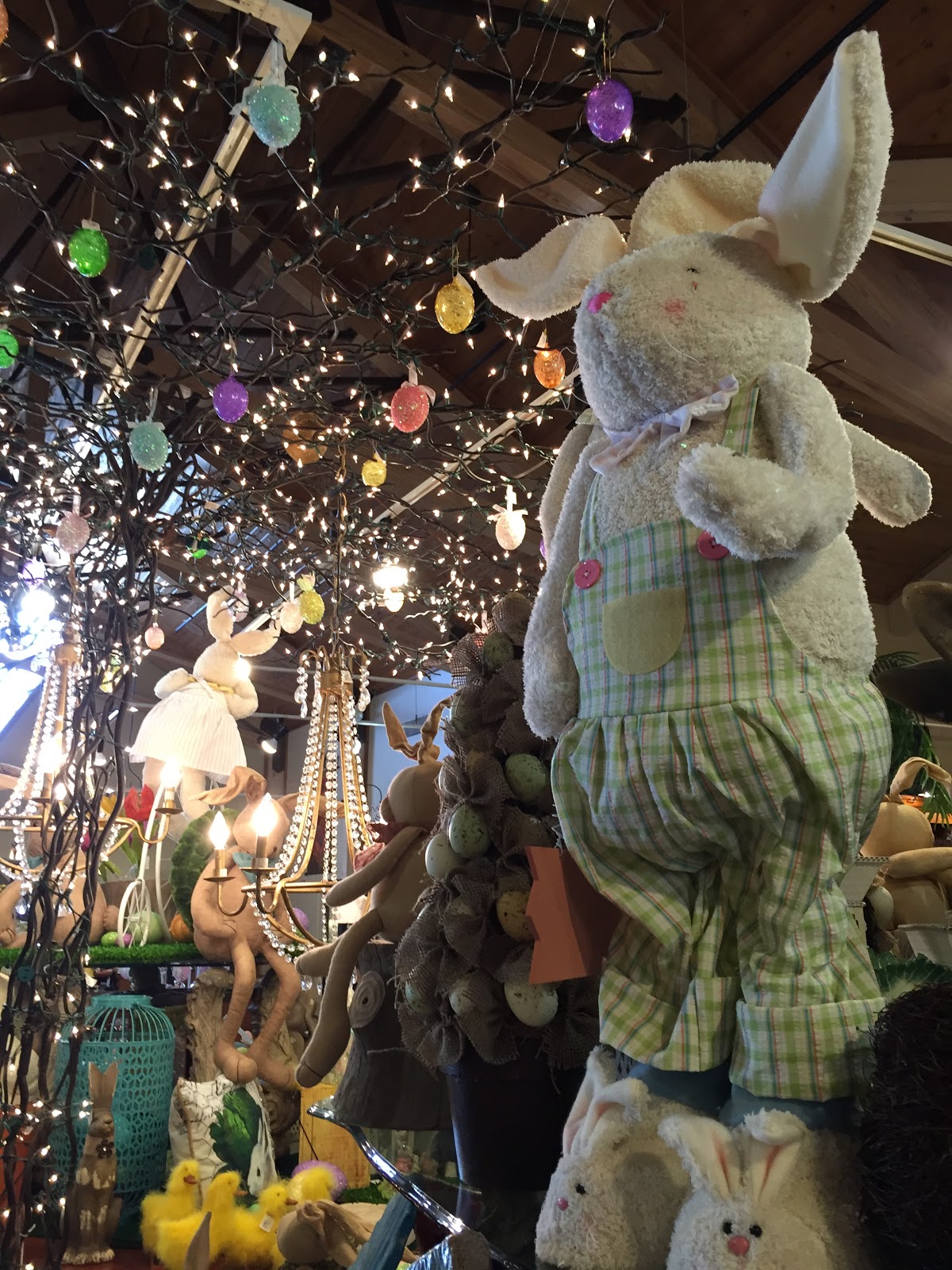
Easter!

brings forth Spring, Bunnies, Easter finery and bonnets,


Question: "What is the origin of the Easter bunny and Easter eggs?"

Answer
It is thought that the word Easter comes from a pagan figure called Eastre (or Eostre) who was celebrated as the goddess of spring by the Saxons of Northern Europe. A festival called Eastre was held during the spring equinox by these people to honor her. Of interest is the word’s relation to east (ost in German). The name for a celebration of the sunrise and a change of season was eventually applied to the Christian celebration of the resurrection of Christ and the new era He heralded.

The goddess Eastre’s earthly symbol was the rabbit, which was also known as a symbol of fertility. Since rabbits and hares give birth to large litters in the early spring, it’s understandable that the rabbit is the symbol of fertility.

The legend of the Easter Bunny bringing eggs appears to have been brought to the United States by settlers from southwestern Germany. The German tradition of the Easter Bunny or “Oschter Haws” migrated to America in the 1800s, likely accompanying German immigrants, many of whom settled in Pennsylvania. Over the past 200 years, the Easter Bunny has become the most commercially recognized symbol of Easter.

In legend, the Easter Bunny, also called the Easter Hare and the Spring Bunny, brings baskets filled with colored eggs, candy, and sometimes toys to the homes of children on the night before Easter, in much the same way as Santa Claus is said to deliver presents on Christmas Eve. The Easter Bunny will either put the baskets in a designated place or hide them somewhere in the house or garden for the children to find when they wake up in the morning, giving rise to the tradition of the Easter egg hunt.

Should Christian parents allow their children to participate in traditional activities that refer to the Easter Bunny? This is a question both parents and church leaders struggle with. There is nothing essentially evil about the Easter Bunny, unless it is used to promote the goddess of spring or fertility rites. What is important is our focus. If our focus is on Christ and not the Easter Bunny, our children will understand that, like Santa Claus, the Easter Bunny is merely a symbol. As with Christmas, Easter should be a time to reflect upon and celebrate the incarnation, the resurrection and the risen Christ.

No Words needed!

 Our three year old great grandson, is living with CDH (  Congenital Diaphragmatic Hernia )   He needs no words to tell us his thoughts or ...